Can You Sell Gold Fillings? What Gold Inlays and Onlays Are Worth
Yes — if a filling is actually gold, it can be sold for its gold content. Here is how to tell a gold inlay or onlay from a silver-colored amalgam filling, what decides its value, and how to mail it in with a prepaid, insured USPS label.
Free prepaid, insured USPS shipping label and packing instructions, usually emailed the same business day.
Yes, you can sell gold fillings — provided they really are gold. "Gold fillings" are usually cast gold inlays and onlays, and occasionally older gold-foil fillings. They are made from gold alloys and can be sold for their gold content. Silver-colored amalgam fillings contain no gold. Dental Gold Experts buys gold fillings, inlays, and onlays by mail from anywhere in the United States, with no minimum quantity; your offer is based on the gold content measured after melting and is shown in a written report.
- A gold inlay or onlay is a small, solid cast-gold piece. One piece is welcome.
- Amalgam ("silver") fillings are a mercury, silver, tin, and copper mixture with no gold.
- Not sure what you have? Send it anyway. Offers are based on gold content only.
- Value depends on the post-melt weight, the gold percentage, the gold spot price shown in your written report, and the payout rate.
To estimate a payout before you ship, use the dental gold value calculator. The final offer is determined after melting and assay.
Which fillings actually contain gold?
Most people who search for "sell gold fillings" have one of three things in hand:
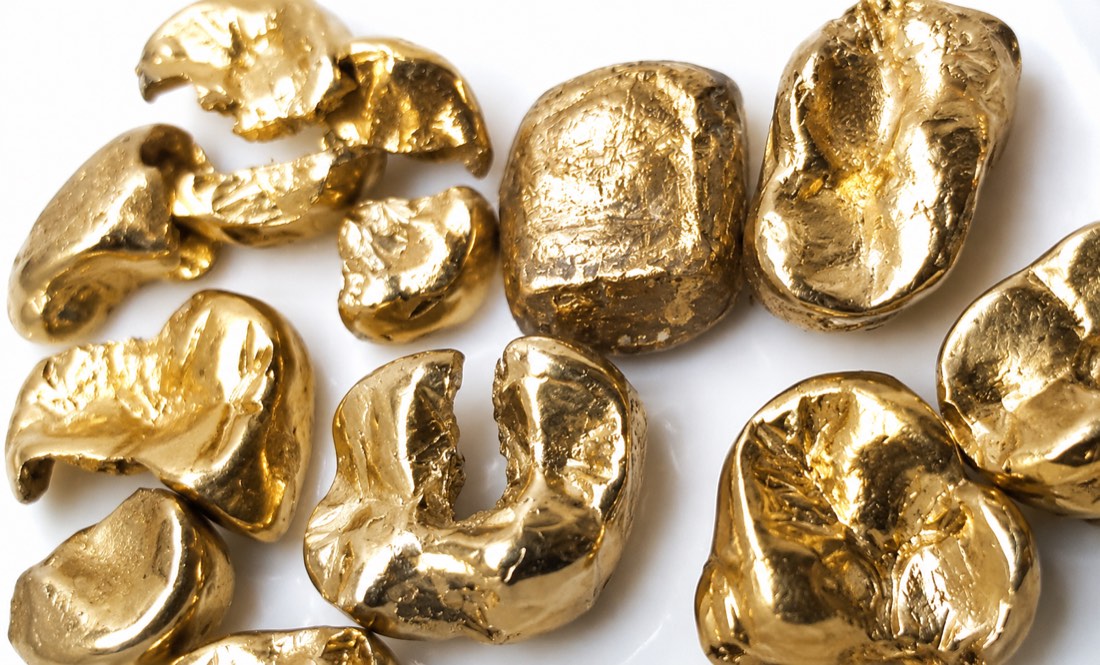
- Cast gold inlays and onlays. These are made in a dental lab from a gold-based casting alloy and cemented into the tooth. An inlay sits inside the biting surface; an onlay also covers one or more cusps, so it is usually a little larger. These are the "gold fillings" most people mean.
- Gold-foil fillings. An older technique in which the dentist packed gold directly into the cavity. They are rare in modern dentistry but still turn up in older extracted teeth and estate collections.
- Partial-coverage gold restorations that look like a small crown. If the piece covers most of the tooth, treat it like a crown. See our guide to selling gold crowns.
In 2003 the ADA Council on Scientific Affairs classified dental casting alloys by their noble-metal content, as published in the ADA's materials for indirect restorations resource: high-noble alloys contain at least 60% gold and platinum-group metals, with gold at least 40%; noble alloys at least 25%; and predominantly base alloys less than 25%. Yellow cast-gold inlays and onlays are generally made from the gold-rich end of that range, but the alloy used in any particular piece is not printed on it. The only way to know the gold percentage of your material is to melt and assay it.
What is not a gold filling
Three common restorations are often mistaken for gold fillings. None of them adds gold to an offer, so they are worth ruling out before you sell gold fillings by mail:
- Amalgam ("silver") fillings. The U.S. Food and Drug Administration describes dental amalgam as a mixture of liquid mercury and a powdered alloy of silver, tin, and copper. It contains no gold, so Dental Gold Experts does not pay for it.
- Tooth-colored composite, porcelain, and ceramic fillings. These contain no metal.
- White or silver-colored metal restorations. Some of these are palladium- or platinum-based alloys and some are base metal. Dental Gold Experts pays for gold content only, so a white piece is valued on whatever gold it contains. Our guide to white dental gold explains the alloys in more detail.
You do not have to sort any of this out before you ship. Most people who sell gold fillings send the uncertain pieces along with the obvious ones; anything that turns out to be base metal simply adds no gold to the lot.
How to tell whether your filling is gold
A few quick observations narrow it down before you decide to sell gold fillings, although none of them replaces an assay:
- Color. A yellow metal piece is probably a gold alloy. A dull silver-grey filling that was placed as a soft paste and hardened in the tooth is probably amalgam. Color alone is not reliable for white metal restorations, which can be noble or base metal.
- Shape. A cast inlay or onlay is one solid, precisely shaped piece that came out of the tooth whole, often with a smooth, polished biting surface.
- Markings. Dental restorations are not stamped with a karat mark the way jewelry is, so the absence of a stamp means nothing.
For photographs and more detail, see how to identify dental gold.
Inlays and onlays are small, so people tend to assume they are not worth the trouble. The ones that are cast gold are made from some of the richest alloys in dentistry, and a handful of them adds up. I melt everything you send together as one lot and analyze the melted material by XRF, so you are paid on the gold that is actually there, not on a guess about what it looked like.
What do you get when you sell gold fillings?
There is no fixed price for a piece like this. Your offer is calculated from four things: the post-melt weight, the gold percentage, the gold spot price shown in your written report, and the payout rate. Inlays and onlays are smaller than full crowns, so each piece contains less metal, and several pieces sent together add up.
If you send more than one piece, everything you submit is melted together as one lot, and Blake analyzes multiple spots on the melted material by XRF to determine its gold content. Pieces are not valued separately.
- Assume one onlay weighs 1.5 grams after melting.
- Assume the alloy is 60% gold. Gold content: 1.5 g × 0.60 = 0.90 g of gold.
- Convert to troy ounces: 0.90 g ÷ 31.1035 = 0.0289 troy oz.
- Assume a gold spot price of $4,000 per troy ounce (a round figure chosen for the arithmetic; it is not today's price and not a price Dental Gold Experts uses). Value of the contained gold: 0.0289 × $4,000 ≈ $116.
- Your offer is that gold value multiplied by the payout rate shown in your written report, so the offer is lower than the gold value.
Every figure above is assumed for illustration. Gold spot prices change daily; you can compare published prices from sources such as Kitco or the LBMA. Your actual offer uses the post-melt weight, the gold percentage measured by XRF, and the gold spot price shown in your written report.
For an estimate with your own weight and estimated purity, use the dental gold value calculator. For whether small amounts of dental gold are worth the effort at all, see is dental gold worth selling?
Find Out What Your Gold Fillings Are Worth
The simplest way to sell gold fillings: request your free prepaid, insured USPS shipping label, ship your fillings, inlays, or onlays, and receive a written report with your offer.
Can you sell gold fillings that are still in the tooth?
People often ask whether they can sell gold fillings without digging them out of the tooth first. Dental Gold Experts accepts gold crowns that are still attached to extracted teeth, and you can send them as they are — our guide to gold crowns on extracted teeth covers that case in full. Before weighing and melting, we sort your material and remove as much non-metal material as practical. For a gold inlay, onlay, or filling that is still in an extracted tooth, contact us before shipping and we will tell you how to proceed.
If you are selling teeth that were removed from a family member, or material from an estate, our guide on who owns extracted dental gold covers the common questions. Dental Gold Experts buys from sellers who own the material or are authorized to sell it.
Where to sell gold fillings
The place you choose matters less than how the buyer works out what your pieces are worth. Dental Gold Experts is based in Houston, Texas, and buys by mail from customers throughout the United States, so you do not need a buyer in your own town. Pickup is available in Houston, San Antonio, and Central Texas; contact us to discuss direct pickup options.
If you are comparing places to sell gold fillings, these are useful questions to ask any buyer:
- How is the gold content determined, and do you get that in writing?
- Is the piece paid on its measured gold content, or on what it looks like?
- What does shipping cost, and is the shipment insured?
- When is payment issued once you accept an offer?
Dental Gold Experts melts your material and analyzes the melted material by XRF, then sends a written report showing the weight, gold percentage, the gold spot price used, the payout rate, and the payout calculation.
How to sell gold fillings by mail
The process is the same whether you sell gold fillings one piece at a time or send a jar that has been filling up for years.
Get your free USPS shipping label
Request your label and we email a free prepaid, insured USPS shipping label and packing instructions, usually the same business day. Use a USPS Small Flat Rate Box, securely tape the outside edges, attach the label, and drop the box at any USPS location.
Melt, XRF, and written report
You sign a pre-melt agreement before anything is melted. Blake melts your material and analyzes multiple spots on the melted material by XRF. Your written report shows the weight, gold percentage, the gold spot price used, the payout rate, and the payout calculation.
Accept and get paid
If you accept, we issue payment within 24 hours, usually immediately, by Zelle, PayPal, check, or ACH bank transfer. Receipt depends on the payment method.
The prepaid USPS shipping label and the assay are free · No minimum quantity
Get Your Shipping Label →Material is usually processed the day your package arrives or the next day; packages received on a weekend are processed the next business day. For the full process, see how to sell dental gold.
How dental practices sell gold fillings
Practices and labs accumulate them in batches rather than selling one piece at a time. They build up inlays, onlays, and crowns over time, and they can be sent together as one submission. There is no minimum quantity and no separate process for practices. Mixed pieces, including ones you are unsure about, are accepted; offers are based on gold content only. Our guide for dental practices selling scrap covers lot handling and record keeping.
Ready to Sell Gold Fillings?
Request your free prepaid, insured USPS shipping label. Blake melts your material, analyzes the melted material by XRF, and sends you a written report with your offer. Payment is issued within 24 hours after you accept.
Get Your Shipping Label →Frequently Asked Questions
Verified Customer Reviews
Read what dental practices say about working with dental gold buyers they trust on Trustpilot.
Founded by Blake Plummer, a precious metals professional with 15+ years of experience buying, valuing, and refining gold.
Houston, Texas Based · Serving Dental Practices Nationwide
View Reviews on Trustpilot