These dental gold selling questions come up again and again from patients, families, and dental offices preparing to send in crowns, bridges, fillings, inlays, onlays, or mixed scrap. Some of what's below is procedural, like how to package a box or where to drop it off. Some of it gets at why the process works the way it does, particularly around weight and value, which is where most confusion starts. If you want the full picture before you start, our main guide to selling dental gold covers the process from label to payment. If something isn't covered here, reach out directly and we'll answer it.
Quick Answer
How Selling Dental Gold Works
- Request a prepaid, insured USPS shipping label.
- Pack your dental gold securely in a USPS Small Flat Rate Box.
- We melt and assay the material and send you a written offer.
- After you accept the written offer, payment is typically sent by Zelle or PayPal within 24 hours.
Dental material must be melted to determine its precious-metal content. Once melted, it cannot be returned in its original form.
Browse Questions
The Process at a Glance
The dental gold selling questions below are grouped by topic, so you can jump straight to shipping, value, payment, or office submissions.
Dental Gold Selling Questions About the Selling Process
You request a prepaid, insured USPS shipping label, pack your dental gold in a USPS Small Flat Rate Box, and drop the package at a staffed USPS location. Once it arrives, your material is logged, melted, and assayed. You then receive a written offer showing the post-melt weight, assay percentage, gold price used, and payout calculation. Once you accept, payment is typically sent by Zelle or PayPal within 24 hours.
Yes, and most people do. Request the label online, pack everything at home, and hand the box to a clerk at the post office. There's no office visit and no meeting anyone in person at any point.
Your package is logged when it arrives. From there, the material is melted so non-metal components, like porcelain, tooth structure, and cement, can be removed and the remaining metal can be assayed.
A written offer follows, showing the post-melt weight, assay percentage, gold price used, and payout calculation, so you can see exactly how the number was reached.
Yes. Melting is what allows the metal to be separated from porcelain, tooth structure, and cement, and it's what makes an accurate assay possible. There's no reliable way to determine recoverable gold content without it.
Once dental material is melted, the individual crowns, bridges, or fillings no longer exist as separate pieces. Dental material must be melted to determine its precious-metal content, and once melted, it cannot be returned in its original form. This is a normal part of any legitimate melt-and-assay process, not something specific to your submission.
Timing depends mostly on shipping transit and assay scheduling, so it can vary somewhat from one submission to the next. Once the assay is complete and you accept the written offer, payment is typically sent by Zelle or PayPal within 24 hours.
No. Send crowns, bridges, fillings, and scrap exactly as they are. Cleaning, sorting, or removing porcelain isn't necessary and won't change the outcome of the assay.
Porcelain and tooth material separate out during melting and aren't counted toward your payout. That's exactly why they don't need to be removed before shipping. Their presence doesn't distort the assay of the recovered metal underneath.
What We Buy
Common dental gold we accept:
- Gold crowns
- Gold bridges
- Gold fillings
- Gold inlays and onlays
- Porcelain-fused-to-metal restorations that may contain gold
- Mixed dental gold scrap and dental lab gold scrap
Some dental alloys contain small amounts of other precious metals alongside gold. Our focus stays on evaluating your dental gold accurately, not on estimating other metal content in advance.
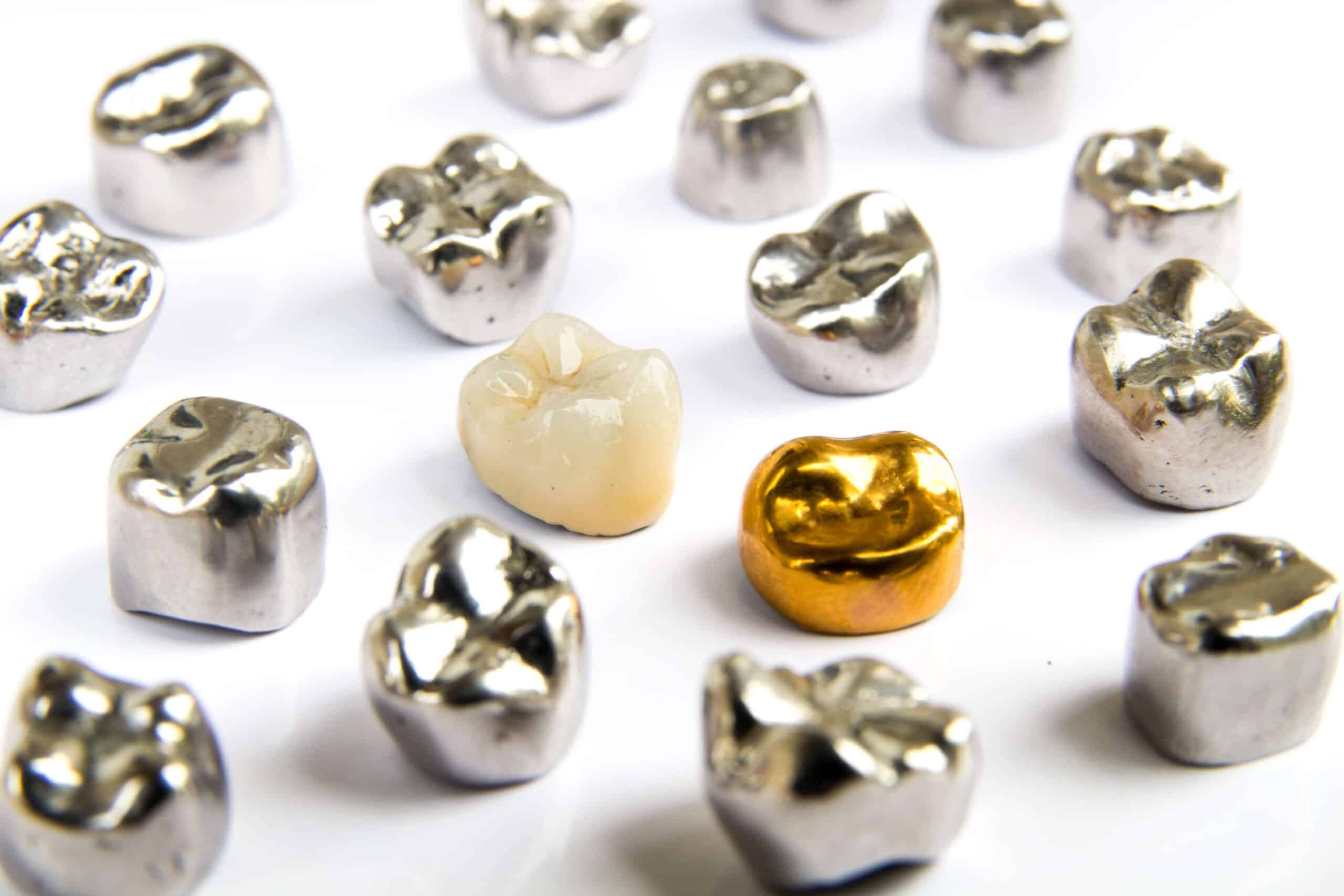
We buy gold crowns, gold bridges, gold fillings, gold inlays, gold onlays, porcelain-fused-to-metal restorations that may contain gold, and mixed dental gold scrap from individuals, dentists, and dental labs.
Yes. You don't need to remove tooth material from a crown before shipping it. That separation happens during processing.
Yes. Porcelain-fused-to-metal crowns can be shipped as they are. The porcelain layer is removed during melting, so there's no need to strip it beforehand.
Absolutely. There's no minimum, so a single crown is well worth sending in. It runs through the same melt-and-assay process a larger batch would.
Yes, including multi-unit bridges. Bridges are evaluated based on their recovered gold content after melting and assay, the same as any other submission.
Yes. Fillings, inlays, and onlays are accepted, even in small quantities, and are evaluated using the same melt-and-assay process as crowns and bridges.
Yes. Dental gold received through an estate or a family member's belongings can be submitted through the standard process, with no separate handling required.
Send it in. Appearance isn't a reliable way to judge dental material. Two pieces that look nearly identical can contain very different amounts of gold, and assay is the only way to know for certain what a piece contains.
Yes. Dental labs can submit accumulated scrap using the same process used by individuals and dental offices, without a separate application or account.
Dental gold is difficult to value accurately before it's processed, because crowns and bridges often include porcelain, tooth material, cement, and mixed alloys. The number that matters isn't simply the weight of the item when it arrives. It's the recovered metal weight and the gold percentage after processing.
That's why each written offer should clearly show the post-melt weight, assay percentage, gold price used, and payout calculation. Blake has spent more than 15 years in precious-metals buying, including pawn shop and precious-metal transactions, and has focused specifically on dental gold evaluation because it involves this extra layer most sellers don't expect.
Ready to Sell Your Dental Gold?
Request a prepaid, insured USPS shipping label. Once your dental gold is received, it will be melted, assayed, and evaluated based on its recovered gold content.
Once you accept the written offer, payment is typically sent by Zelle or PayPal within 24 hours.
Value and Payment
Value is based on four figures: post-melt metal weight, the gold percentage determined through assay, the current gold spot price, and the company's payout rate. Each of these appears on your written offer, so you can see how the total was reached rather than being given a single number with no explanation behind it.
There's no set number, and anyone who quotes you one sight-unseen is guessing. Two crowns that look the same size can carry very different amounts of gold, depending on the alloy your dentist used. What it's worth comes down to the post-melt weight, the assay percentage, and the gold price on the day it's processed.
Gold content isn't visible to the eye. Alloys that look identical in color and shine can differ significantly in what they actually contain. An accurate figure requires melting and assaying the material directly, not estimating from a picture.
Post-melt weight is the weight of the recovered metal after porcelain, tooth material, and cement have been removed during melting. It's typically lower than the item's original weight, and it's the figure actually used in your payout calculation, not the weight of the piece as it arrived.
A crown or bridge as it arrives includes non-metal material such as porcelain, tooth structure, or cement, sometimes more than you'd expect just from looking at it. Once that material is removed during melting, what's left is the actual recoverable metal, and that's naturally going to weigh less than the whole piece did to begin with.
After melting, the recovered metal is assayed to measure the exact percentage of gold present, along with any other precious metals in the alloy. This percentage, combined with the post-melt weight, determines how much gold your submission actually contains.
The current gold spot price at the time of assay is used in your payout calculation. It's disclosed on your written offer so you can see exactly which figure was applied.
A written offer should show the post-melt weight, the assay percentage, the gold price used, and the resulting payout calculation. If any of these four figures are missing, it's fair to ask for them before accepting an offer, from us or from any buyer.
After your material is melted and assayed, you're sent a written offer showing the post-melt weight, assay percentage, gold price used, and payout calculation.
Once you accept the written offer, payment is typically sent by Zelle or PayPal within 24 hours.
Zelle or PayPal, whichever you'd prefer.
What Determines Value
Shipping
Place the dental gold securely inside a USPS Small Flat Rate Box so pieces can't shift around or press against a weak seam. Seal the box, tape the outside edges, and attach your prepaid label before dropping it off.
A USPS Small Flat Rate Box. It's the right size for nearly every submission and keeps the shipping straightforward.
It's a sturdy, standardized box that fits most submissions well and pairs cleanly with a flat-rate prepaid label. When it's sealed and taped correctly, it holds up reliably during handling and transit.
Yes. Seal it, then run tape along the outside edges. It's a small step, but it keeps the box from working open while it's in transit.
Yes. The prepaid label includes insurance and tracking from drop-off through delivery at our facility.
Use a staffed USPS location rather than an unattended drop box. Dropping it with a clerk lets you get a receipt at the time of drop-off, which is worth having.
Yes. Keep the receipt as your record of drop-off and as a reference for the tracking number tied to your insured shipment.
Yes. Dental gold can be shipped from anywhere in the United States using the prepaid, insured USPS label.
Your package is logged, then your dental gold is melted and assayed. A written offer follows, showing how the payout was calculated.
USPS tracking can occasionally lag behind a package's actual location, which is more common than people expect. If tracking hasn't updated for an extended period, hold onto your receipt and contact us so we can help you follow up.
Dental Practices
If you run an office or lab, these dental gold selling questions apply to recurring scrap collection as well as one-time submissions.
Yes. Practices and labs use the same shipping, melt-and-assay, and payment process used for individual submissions, with no separate tier or application.
No. There's no minimum submission size for individuals or dental practices.
A labeled container kept in the operatory or lab works well for most offices. Extracted crowns, removed restorations, and lab scrap can be added over time and shipped together whenever it's convenient, rather than mailing something after every single procedure.
Separating by provider isn't required for processing on our end. Some offices choose to track it internally anyway for their own recordkeeping, which is entirely optional.
No need. Ship it exactly as it's collected. Cleaning it first doesn't change the assay and only adds a step for your staff.
Yes. Every submission receives a written offer showing the post-melt weight, assay percentage, gold price used, and payout calculation.
Yes. Offices commonly accumulate several crowns, bridges, or fillings over weeks or months and ship them together as a single submission.
Yes. Visit the Dental Gold Referral Program page for current details.
Read Our Verified Customer Reviews
See feedback from customers who have used Dental Gold Experts to sell their dental gold.
View Dental Gold Experts on Trustpilot
Ready to Sell Your Dental Gold?
Request a prepaid, insured USPS shipping label. Once your dental gold is received, it will be melted, assayed, and evaluated based on its recovered gold content.
Once you accept the written offer, payment is typically sent by Zelle or PayPal within 24 hours.