How to Sell Dental Gold Bridges: Value, Alloys, and How to Get Paid
A complete guide to dental gold bridge value — the precious metals inside older bridges, how to identify what you have, and how to recover maximum value from every extraction.
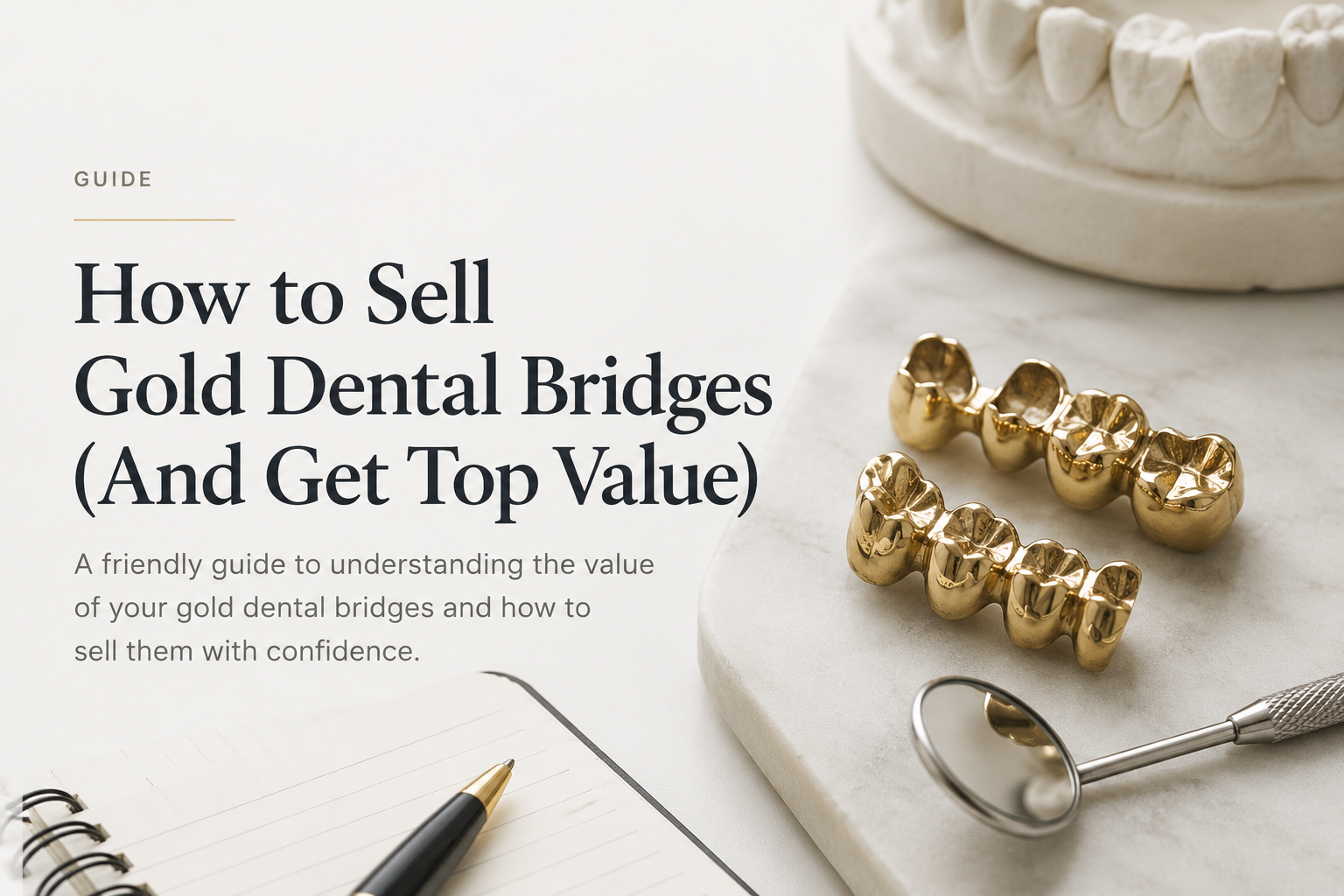
High-noble and noble alloy dental gold bridges — gold and palladium content varies significantly by era of fabrication, alloy classification, and number of units
If you're looking to sell dental gold bridges, the most important thing to understand upfront is that many older bridges contain meaningful amounts of gold, palladium, and platinum — precious metals that hold real recoverable value at current spot prices. Most dental bridges placed before the mid-1990s were cast from high-noble gold alloys, which served as the clinical standard for durable fixed restorations at the time. That means a bridge that's been sitting in a drawer or a specimen cup for years may represent real recoverable precious metal, even if it doesn't look valuable at a glance.
This guide covers everything you need to know about selling dental gold bridges: which alloys contain the most precious metal, how to tell if your bridge is made of gold, realistic value expectations by bridge type, and how to get the best outcome through a professional melt-and-assay evaluation.
weight & spot prices
in gold bridges
gold bridge alloy
valuation method
Only a professional melt-and-assay can determine the exact precious metal content of an individual dental gold bridge. Color, visual inspection, and general gold buyer XRF devices cannot accurately identify or price the full alloy composition of dental gold.
What Metals Are Inside a Dental Bridge?
Before you can understand dental bridge value, you need to understand what's inside. Not every bridge contains precious metals worth recovering. Dental bridges fall into three broad categories based on metal composition, as classified by the American Dental Association:
Au + PGM ≥ 40%
Pd often primary
Minimal melt value
Don't discard
Older dental bridges — particularly those placed before the mid-1990s — were commonly cast from high-noble alloys because gold was the clinical standard for durable fixed restorations before ceramic and zirconia alternatives became widespread. If someone hands you an old bridge with yellow metal, it's worth assuming gold alloy until proven otherwise. Learn how the same alloy classification applies to crowns in our guide to how much gold is in a dental crown.

A dental bridge placed before 1995 is almost always worth examining closely. High-noble gold alloys were the default for many years. The shift toward base metals and full-ceramic happened gradually through the late 1990s and 2000s as dental labs looked to reduce material costs. When I see an older bridge come across my evaluation table, my first assumption is gold — not the other way around. The vintage alone tells you a lot before you even pick it up.
How to Identify a Gold Dental Bridge
Before you decide whether to sell, throw away, or hold onto a dental bridge, it helps to know what you're looking at. While appearance alone can't confirm exact metal content, there are visual clues that can tell you whether a piece is worth having professionally evaluated.
Yellow Gold Bridges
A bridge with a warm yellow tone is the easiest to recognize. This color almost always points to a high-noble gold alloy, which is the most valuable category of dental casting alloy. If your bridge looks like this, the answer to "is my bridge made of gold?" is very likely yes — and it's worth evaluating rather than discarding.
White or Silver-Toned Bridges
Not all valuable bridges are yellow. A white or silver-colored bridge can still be a noble alloy with significant palladium content. Palladium is a precious metal in its own right, and in some market conditions it has traded at or above the price of gold per troy ounce. This is one of the most common reasons people mistakenly throw away a piece that's actually valuable — they assume "white" means "not gold," which isn't a safe assumption.
Porcelain-Fused-to-Metal (PFM) Bridges
PFM bridges look tooth-colored or white on the surface, but underneath the porcelain is a metal coping that's often cast from a gold-palladium or palladium-based alloy. So if you're wondering "is porcelain still valuable?" — the porcelain itself has no melt value, but the metal structure beneath it frequently does. Look closely at the edge near the gumline; a thin sliver of metal is often visible where the porcelain meets the margin.
Visible Metal Margins
One of the most reliable visual cues on any crown or bridge is the margin — the edge where the restoration meets the natural tooth or gumline. A visible metal line at this margin, even on an otherwise tooth-colored piece, is a strong sign that a metal substructure is present underneath.
Older Bridge Alloys
Age is one of the most useful clues you have. Bridges placed before the mid-1990s were overwhelmingly cast in high-noble or noble alloys, since these were the clinical standard before base-metal and all-ceramic materials became widespread. If you know roughly when a bridge was placed and it predates that shift, treat it as a strong candidate for evaluation.
Why Appearance Alone Isn't Enough
Color, shine, and weight can point you in the right direction, but none of these can confirm the exact alloy composition or precious metal percentage. Two bridges that look identical can have very different gold and palladium content depending on the lab and era that produced them. Consumer gold-testing tools and simple visual inspection are not reliable enough to price dental alloys accurately — they're built for simpler, single-metal items like jewelry, not the complex multi-metal mixtures used in dental casting.
So is your bridge worth anything? If it contains any yellow or white metal — visible on the surface or just at the margin — the answer is usually yes, and it's worth finding out for certain. Should you throw it away? Not without having it looked at first. The only way to know the exact precious metal content, and therefore the real value, is a professional melt-and-assay evaluation, which is covered in detail in our dental gold assay process guide.
How Much Is a Dental Bridge Worth When You Sell It?
Dental gold bridge values are directly influenced by the current price of gold. While weight and alloy composition determine how much recoverable gold is present, the market price of gold ultimately affects the final value. That's why a professional melt-and-assay provides a much more accurate assessment than appearance alone — and it's the step every seller should take before deciding whether to sell dental bridges or hold onto them.
| 🌉 Bridge Type | 🔢 Units | ⚗️ Common Alloy | 🔩 Precious Metal Content | 💰 Relative Value |
|---|---|---|---|---|
| Single-unit gold pontic | 1 | High-noble | 60–88% Au + PGM | Modest but real |
| 3-unit gold bridge | 3 | High-noble | 60–88% Au + PGM | Moderate |
| 5-unit high-noble bridge | 5 | High-noble | 60–88% Au + PGM | Higher |
| PFM bridge — gold-palladium coping | 3–5 | Noble / High-noble coping | Coping: Pd/Au dominant | Moderate, varies by coping size |
| High-palladium noble bridge (white) | 3 | Noble | Pd 50–80%, low Au | Moderate to high |
| Base metal bridge (Ni-Cr) | Any | Base metal | None significant | Minimal |
| All-ceramic / zirconia bridge | Any | Ceramic / zirconia | None | None |
Illustrative value ranges based on current approximate market conditions and typical alloy composition. Actual payout depends on live spot prices and precise assay results. Use the dental gold calculator for a quick estimate, or track current prices at Kitco.
No two dental gold bridges are exactly alike. The amount of gold can vary significantly depending on when the bridge was made, the alloy used, its size, and the number of units. A larger bridge doesn't always contain more gold, and two bridges that look nearly identical can have very different gold content.
Because appearance alone can't determine gold content, the most accurate way to evaluate a dental gold bridge is through a professional melt-and-assay. This process measures the actual gold recovered from the alloy, providing a precise basis for your offer.
Why Payout Is Not 100% of Melt Value When You Sell Dental Bridges
Dental alloys are complex mixtures of multiple metals: gold, palladium, platinum, silver, copper, and sometimes zinc or indium. Before any of that material can reach full spot-price liquidity as refined metal, it goes through professional melt-and-assay processing — the same methods used throughout the precious metals industry. Refining fees, assay costs, processing time, and market risk between purchase and settlement all factor into the buyer's offer.
A reasonable buyer typically returns a majority of refined melt value, commonly in the 70–90% range, depending on volume, metal mix, and market conditions. An offer well below that range is worth questioning. Claims of paying 100% of melt value are also worth questioning, since the underlying processing costs are real and have to be accounted for somewhere.
When I evaluate a lot of dental material, I weigh it, read the alloy from visual cues and approximate vintage, and work backward from current spot prices minus my actual processing costs. I can walk through the exact math behind any number I give. If you're comparing offers and see wildly different numbers, ask each buyer to explain how they calculated it. A serious buyer won't hesitate to show their work.
How to Sell Dental Bridges: Step-by-Step
Whether you're a patient with a recently removed bridge, a dental office clearing accumulated restorations, or an estate handling dental work, the process to sell dental bridges follows the same steps.
- 1Identify What You Have
Sort your dental pieces. Yellow metal indicates gold or gold alloy. PFM pieces look white on top but often show a visible metal margin at the gumline edge. Set aside obvious all-ceramic or zirconia pieces. When in doubt, keep it — let a specialist decide.
- 2Don't Clean, Alter, or Separate the Pieces
Leave everything as-is, including any attached porcelain. Filing, sanding, or chemically cleaning restorations before sale can reduce weight and affect the visual cues used to assess alloy type, and removing porcelain yourself risks losing small fragments of the metal coping underneath. Experienced buyers have evaluated thousands of pieces in all conditions.
- 3Request Your Free Insured Mail-In Kit
Dental Gold Experts provides a fully insured prepaid shipping kit at no cost. Your material is covered during transit. There is no out-of-pocket cost to send it in and receive a written evaluation.
- 4Receive a Written Assay Report and Offer
Blake Plummer evaluates your material, weighs it, and calculates an offer against current spot prices. The dental gold assay process produces a written breakdown showing how the number was reached — gross weight, metal percentages, spot prices used, and the final offer calculation.
- 5Accept and Get Paid Within 24 Hours
After reviewing your written assay report, payment is issued within 24 hours of accepting the offer..
Request Your Free Insured Mail-In Kit
Ship your dental bridges and scrap at no cost. Receive a written assay report showing the precious metal content identified and a transparent offer based on current spot prices.
Dental Offices: Recovering Value From Bridge and Crown Scrap
Dental offices are often sitting on an overlooked secondary revenue stream within the practice — and many could sell dental bridges and crowns they've already removed instead of letting them sit unused. Every time a crown or bridge is removed during a replacement procedure — or when a patient never returns for a permanent restoration — that metal ends up in a drawer, a bag, or a specimen cup.
Practices that restored teeth extensively through the 1970s, 80s, and 90s tend to hold the most valuable inventory. As Dental Economics has documented, practices that systematize scrap recovery tend to recover more revenue over time than those that treat it as an occasional afterthought. The difference is process, not volume.
- Save every extracted metal restoration. Yellow, white, silver, mixed — all of it. Don't sort, don't discard based on color. The metal substructure of a PFM bridge can still contain meaningful precious metal content.
- Use a dedicated collection container. A simple labeled jar or zip bag in the operatory is all it takes. The workflow requires nothing more than dropping extracted bridges and removed restorations in the same place every time.
- Batch submissions periodically. There is no minimum quantity — but submitting a larger accumulated batch means one evaluation covers more material efficiently. Batching does not reduce per-unit value; each piece is assessed individually within the melt.
- Request the free prepaid kit when ready. Dental Gold Experts ships a fully insured, prepaid envelope at no cost. Pack your collected material, drop it at any USPS location, and the assay process begins on arrival.
- Review the written assay report. Every submission comes with a complete breakdown showing gross weight, metal percentages, spot prices used, and the final offer calculation. This is the document that tells you exactly what was in your bridges — with chemistry behind it, not a guess.
Common Mistakes When You Sell Dental Bridges
Understanding what to avoid is just as important as knowing the process when you sell dental bridges. These are the mistakes that tend to cost sellers real money.
- Selling to a general pawn shop. Most pawn operators aren't equipped to identify palladium content or price mixed dental alloys correctly. They'll often price purely on gold appearance — on material that may contain valuable palladium they're simply not accounting for. A specialist buyer evaluates every element present in the alloy.
- Discarding PFM pieces. The porcelain coping hides a metal substructure. Don't assume a tooth-colored piece is worthless. The coping is often cast from a gold-palladium alloy with real value, so think twice before treating it as dental waste.
- Accepting the first offer without context. Know approximate current gold and palladium spot prices before any conversation. Track them at Kitco or the dental gold calculator. That baseline helps you evaluate whether an offer is genuinely fair — see our guide on the best place to sell dental gold for more on comparing buyers.
- Cleaning, altering, or separating pieces before sale. This affects both weight and evaluation accuracy, and removing porcelain yourself risks losing fragments of metal. Leave pieces exactly as they are.
- Waiting indefinitely. Precious metals markets move constantly. If you have dental gold sitting unused, it's worth getting it evaluated sooner rather than later — the sooner you decide to sell dental bridges, the sooner that value stops sitting idle. Even if you don't sell immediately, knowing what you have costs nothing.
Avoid discarding a dental bridge — yellow or white — without professional evaluation. White or silver bridges frequently contain meaningful palladium, which has historically traded at or above gold per troy ounce. The appearance of a crown or bridge is not a reliable indicator of its precious metal content or value.
Frequently Asked Questions: Selling Dental Bridges
Verified Customer Reviews
Read verified customer reviews on Trustpilot.
Founded by Blake Plummer, a precious metals professional with 15+ years of experience buying, valuing, and refining gold.
Houston, Texas Based · Serving Dental Practices Nationwide
View Reviews on Trustpilot